
I’m going to start with the assumption that most people don’t actually believe straight, white, cis people invented “slay” and “throw shade” and “spill tea.”
(This could be, as they frequently are, a dangerous assumption.)
But I’m also going to start with the knowledge that when fun, sassy slang lands in people’s laps, the tendency is often to pick it up and start throwing it around without any consideration of where it came from, or at best tracing it back to RuPaul’s Drag Race and werking away.
The thing is, the origin of that language is a significant part of Black and Latino LGBTQ+ culture that goes back further and wider and deeper than you might know, and it’s important to understand where the language we use comes from, and I just think ballroom culture is really cool and want to tell you about it.
So here’s how Black and Latino drag queens have taught you how to talk.
Strictly ballroom
It starts in the ballroom.
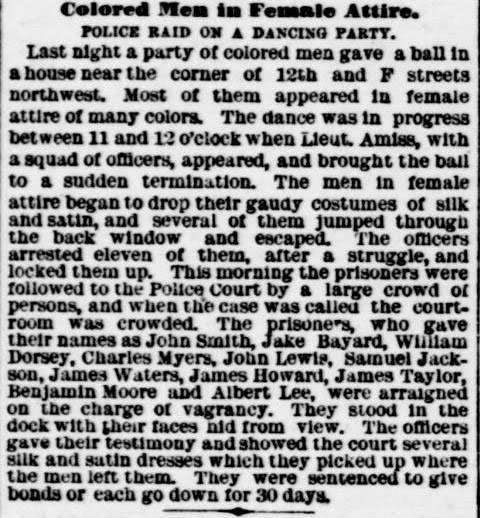
Ballroom culture as we currently know it (“house ballroom”) emerged largely in the late ‘60s and early ‘70s, but its roots are in a history of drag balls going back to the mid-1800s. William Dorsey Swann, a formerly enslaved Black man, was the first person known to call himself the “queen of drag” and hosted secret balls in Washington, D.C., attended largely by other formerly enslaved Black men in gorgeous silk and satin gowns. Despite constant legal harassment and assault from the authorities (you’re shocked, I know), the culture grew and spread from there.
You’ll also be shocked to know that as the tradition of drag balls grew within the LGBTQ+ community, they became white-dominated, and even at integrated balls, Black attendees were faced with racism. So (per basically every nice thing Black people have had throughout history), they started creating their own balls. Harlem drag queens Lottie and Crystal LaBeija are credited with founding the first house, the House of LaBeija, in 1972, which is generally when drag balls started evolving into house ballroom.
House ballroom wasn’t just (and isn’t just) a fun party or glamorous entertainment — it was a place of acceptance and even shelter for Black and Latino queer people in a society that often rejected them. Early on, the houses arose as “families,” led by a “mother” who mentored “drag daughters” through the scene but also provided social support and guidance. The families, with mothers and fathers and children and siblings and other family roles, all taking the name of the house as their last name, really do function as families and havens, often for people who’ve been disowned by their original one. Not just fun, or glamour, or even community — home.
Boots the house down
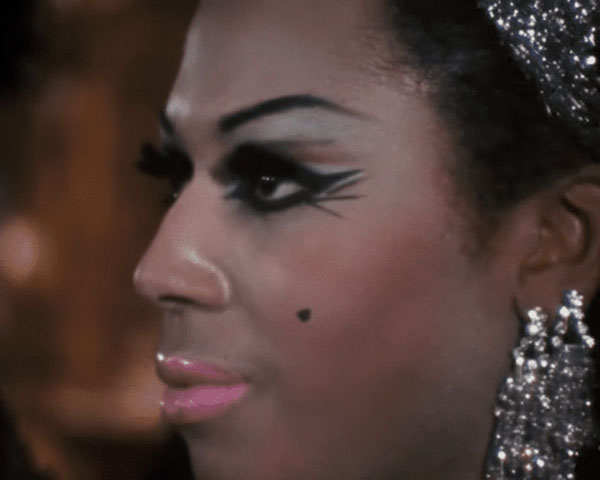
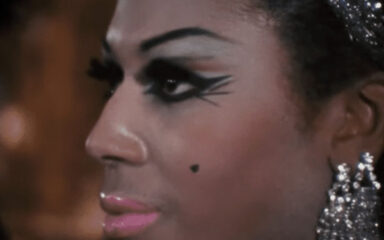
Ballroom culture has also been a major producer of fabulousness across the U.S. Balls can be an hours-long production of performers competing in themed categories (judging face, body, costume, ability to walk in heels…), walking the catwalk and dancing spectacularly in spectacular outfits. (My words fail to do it justice, but I will assign you Paris Is Burning followed by Kiki to see both the spectacularness and the history of it.)
If you’re in any way familiar with ballroom, you’re familiar with voguing (the dancing with the posing and the duck walking and the intricate hand movements), of which Madonna’s version is a pale approximation so don’t let anyone tell you she came up with it on her own. That could, in fact, be referred to as “noguing,” or misappropriating voguing, which finally brings us to the language thing. As they built their own space — and even among the greater LGBTQ+ community, the drag community didn’t always find acceptance — they defined it with things and people and also language that brought them together and created a sense of unity. They were queens because they were. They slayed because they did. They were mothers because they needed mothers. And they still are and do and are.
By the time slang has trickled down into common usage, you’re probably not cool enough to use it anyway, but it can be hard to resist. At least if you’ve ever read someone, spilled tea, or served cu… y’know, anything, you can know whose stiletto-heeled footsteps you’re walking in. If you’ve ever shouted, “Yass, queen!” at a girlfriend who just attempted a bold red lip… I wish you wouldn’t, but there it is.
Pride
So if you’ve picked up the vernacular because it’s fun and sassy or you like Drag Race, it’s good to know where it comes from. Otherwise, when we leave out the real birthplace of the language, we erase a big and significant part of Black and Latino queer culture. (Also, yoinking aspects of culture that was created in the first place because the creators were excluded from society’s things and had to create their own thing is…, well, busted. (Also-also, as trans rights and safety are under growing and constant threat, if you’re over here yoinking their language but not supporting their rights, you don’t get to do that. Get your shit together.)
It’s something to celebrate all the time, but particularly during Pride Month, since it’s the very definition of Black and Latino queer people living their lives as they are, making their own space, and taking the literal spotlight in a society that still, to this day, largely wants them to be ashamed of it. And to that, I would say, “Yass,” but I am not cool enough.
So if you’ve ever werked, thrown shade, or served realness, now you know who served it first. Fierce boots the house down.
Also, it’s a dip, not a death drop, and it looks like this:
Slay.
(Note: Of course I don’t know all this stuff. Credit goes to the Smithsonian, G&L Review, Anthem Orlando, Rocky Berhe and Patricia Scholle, and Vogue.)