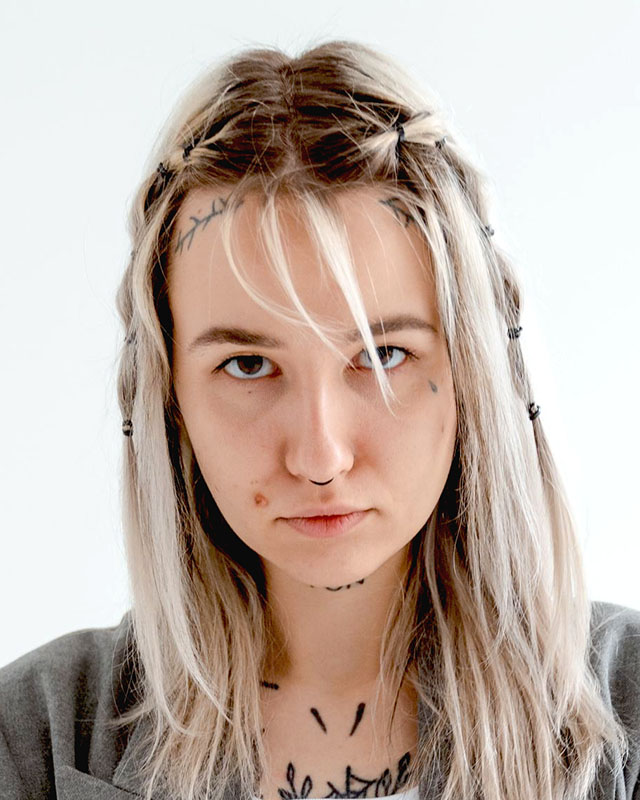

I’m of the sincere assumption no one reading here is of the type to mess around with pretend people — fake testimonials in copy, questionable contributors of content, sloppily assembled characters in fiction. I’m confident the Venn diagram of my readers and lazy and/or unethical writers is two separate circles.
Are there shifty, unethical writers out there, though? To be certain. Are there well-meaning but lazy ones? Those, too. Does that mean you might want to keep an eye out, for fun or profit, for copy or content associated with prolific writer Elara Voss?
To be certain.
Y’all, Elara Voss gets around. She is an author of poetry collections, romance novels, sci-fi novels, travel guides, and a pseudoscientific nonfiction book about treating cancer with ivermectin, in multiple languages, to the tune of more than 60 books just on Amazon. And for that matter, she’s a physicist, a linguist, and a spaceship captain who can offer stock tips and… ahem, foot content.
But how did this individual who does not exist suddenly start existing everywhere?
How do you solve a problem like Elara?
(Note: I do not take full credit for all this — I’ve leaned entirely too hard on Max Read, the preeminent Elara Voss expert whether he wants to be or not.)
Elara is, by all reckoning, three years old, having made no appearances before 2023 — no birth certificates, no public records, nada. There is no apparent connection between the character name/psuedonym “Elara Voss” and any actual human being. The first mention Max managed to turn up was an account that was into exploring the creative possibilities of AI (this is back in August of 2023, remember, that sweet summer child). This snowballed over the next months, and then years, into the inescapable character who might have appeared in, and/or authored, your most recent read.
How did Ms. Voss become so omnipresent? Because AI. Because AIs scrape the web for data, and if an AI determines Elara Voss is a correct response to a prompt asking for a sci-fi character, it’s going to keep churning her out, and that’s going to self-reinforce until she’s a famed and respected leader of Space Marines battling an alien army. She’s GPT-famous for being GPT-famous. (How does an AI get hooked on one particular element in the first place? Dunno. Someone who knows more about how AIs work, please tag in.)
Elara Elena Elias Jingleheimer Voss
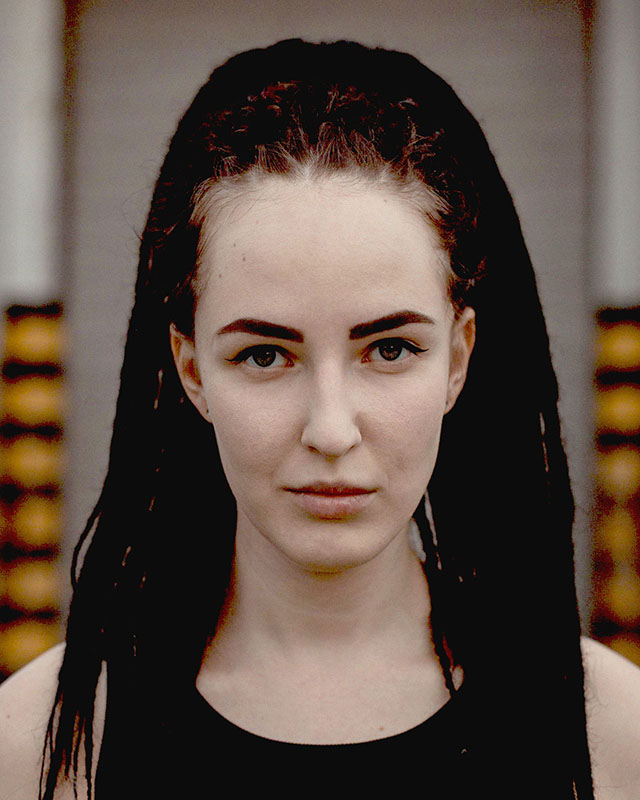
Luckily for Elara, she isn’t carrying the full weight of LLM-generated sci-fi stories. She’s assisted by conceptual cousins like Elara Vex, Elena Voss, Elias Vance, and similar. She’s got Dr. Elara Solis, Dr. Elara Finch (and “witty AI assistant, QU1RKY), and Dr. Aris Thorne. (“Thorne” is also a popular AI go-to.)
NOW: Would I dare write about such a phenomenon without trying it out myself? Of course not. I cracked open a fresh instance of ChatGPT and asked it to “give me a character sketch for a main character in a sci-fi novel.” It asked for some specifics — I decided the character is a scientist facing a dangerous breakthrough that threatens humanity’s survival, who seeks knowledge or discovery. Who did I end up with?
Theoretical physicist and experimental cosmologist Elian Voss.
(A second round gave me salvage pilot and former military navigator Mara Venn. Gemini gave me lead xenolinguist and deep-space archaeologist Dr. Vesper “Vess” Thorne. Google gave me lead repair technician and reluctant smuggler Kaelen Vance. The others wanted me to set up an account, and… nah.)
What is a tulpa?

A tulpa is, essentially, an independent mental entity that manifests from focused, concentrated thought — basically, a thought-being thought into being. It originated in Tibetan Buddhism as a thoughtform arising from disciplined meditation, but as things are wont to do, it’s been wildly repurposed into forms bearing little resemblance to its origins, so don’t blame the Buddhists for Slenderman, is my point.
In the ‘90s and ’00s, the concept spun off into people intentionally willing into being imaginary friends that think independently from the host. When you get into mysticism and folklore, you start hearing about intense, communal thought resulting in an actual, corporeal being. So maybe just watch what you meditate on and who you meditate with.
But Elara Voss?
Elara Voss isn’t the digital product of intense and communal thought — she is arguably the product of a lack of thought, blithely letting the AI do the work of generating a fictional character. It’s the LLM — the many LLMs — doing the “thinking,” the calculation that comes up Elara again and again. And again. And again and again and again.
Elara Voss isn’t going to become a physical entity, but she doesn’t have to. In our digitally connected world, she can just be monomaniacally calculated into the fully independent, intelligent, strategic, technologically knowledgable being with the strength and resilience to defeat any sci-fi challenger she faces that legions of LLMs believe her to be. While we’re worried about AI stealing our jobs, Elara Voss is going to be creating Skynet, and all because writers were too lazy to name their own characters. Thanks a heap, prolific sci-fi author…
… Elara Voss.
I, for one, welcome our new digitulpa overlords.