
July 4th is coming up, and while every July 4th is a party, this one celebrates a particularly special anniversary:
The tenth anniversary of my freelance career.
That’s right, my Independence Day, when I left agency life and ventured out on my own, was July 4th, 2016. I want to say up front I don’t need y’all to make a big deal about it. I’d just be happy if you took some time to be with loved ones, maybe grill out if the weather’s nice. I’m not asking for, like, fireworks, or anything (not that I wouldn’t be honored).
Of course, it’s also the very, very special celebration of the semiquincentennial of our nation’s founding, which is exciting because “semiquincentennial” is fun to say and because a 250th anniversary is, obviously, a big one. And in honor of such, I wanted to look at some of the foundational documents that got us here.
See, your girl isn’t just a writing nerd — she’s also a bit of a history dork, which you can blame on my dad’s History Channel proclivities and my early years in too-close proximity to Colonial Williamsburg. So on this joyous occasion of our nation’s big birthday, I thought I’d drop some context and nuance that could deepen your understanding of our Founders and founding, plus an absolute banger of a gingerbread recipe.
We almost didn’t have a Bill of Rights.
And we got one because people didn’t trust the U.S. government before there was even a government to not trust.
The Constitutional Convention wasn’t just a bunch of bros coming together and co-writing a nice foundational document. There was discussion, debate, and disagreement. And five days before the end of the convention, George Mason spoke up and said the Constitution needed a Bill of Rights. This was shot down for reasons, among them that a specific list of protected rights might imply any rights not on the list weren’t protected (valid), and thus the version of the Constitution sent to the states for ratification was Bill-of-Rightsless.
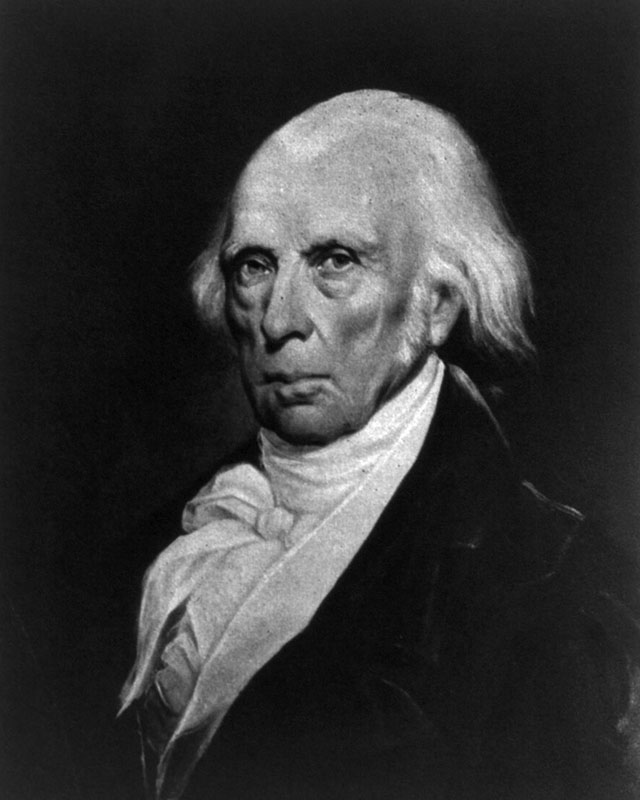
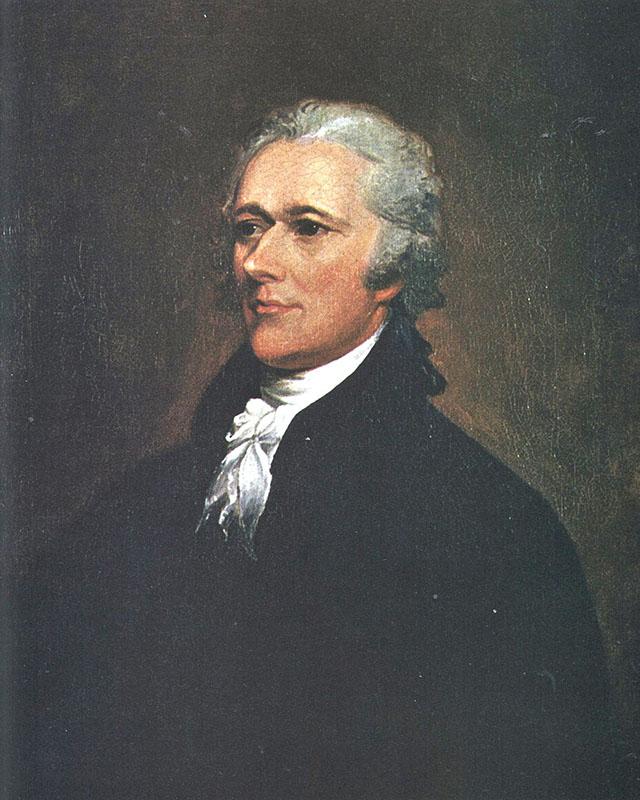
This is where two factions arose. The Anti-Federalists (Mason, Patrick Henry, Sam Adams, others) believed a strong central government would be a threat to individual rights and a president would become as a king, making a BoR necessary to protect us. On the other side, the Federalists (James Madison, John Adams, Alexander Hamilton, others) argued a BoR was unnecessary for a variety of reasons, chiefly that the Constitution was strong enough as it was and protected all the rights (har) and a list of rights would imply a lack of other rights.
While all this was happening, the states were convening ratifying conventions. Some voted to ratify it as-was, others ratified it with amendments attached, and still others refused to ratify it at all. Even after the Constitution finally passed and came into force, enough states continued pushing back to the point that Madison agreed to write a Bill of Rights to be presented to Congress, including a clause specifying rights not specifically granted to the government were to be retained by the people.
So, yeah, the Bill of Rights exists not because the Founders were so thorough and dedicated they wanted to cover every contingency, but because a bunch of guys said the Constitution was enough to protect us and could never be weaponized against us, and another bunch said, “Sorry, you talk a good game, but if you want us to move forward with the founding of this nation, we’re gonna need it in writing.”
We weren’t supposed to get a new Constitution at all, actually.
The delegates were sent by Congress in spring of 1787 with instructions to revise the Articles of Confederation, not scrap them and start over. So our nation was founded under a tradition of asking forgiveness rather than permission.
The drafting itself took place in near-total secrecy — delegates were sworn to silence, guards were posted outside the doors, windows were nailed shut throughout a non-air-conditioned Philadelphia summer, and if you didn’t know those powdered wigs were often made of goat hair, now you know. The idea was to be able to horse-trade and change minds during the drafting process without having to deal with pressure from the people and the press. So, railing against transparency and accountability is also a fine American tradition.
Although the thought of 55 dudes’ worth of wool coats and sweaty goat hair in an unvented room in July might change your mind about wanting to be in The Room Where It Happened.
The original Declaration of Independence condemned slavery.
In his first draft of the Declaration, Thomas Jefferson included among the grievances a 168-word passage accusing King George of “wag[ing] cruel war against human nature itself, violating its most sacred rights of life and liberty in the persons of a distant people who never offended him, captivating & carrying them into slavery in another hemisphere or to incur miserable death in their transportation thither.”
The passage was sanded down to its current language during editing, which change Jefferson would later attribute to delegates from South Carolina and Georgia, as well as northern delegates with shipping interests in the trans-Atlantic slave trade, which tracks. (I’ll also note, though, that while Britain did forbid the colonists from abolishing slave importation for themselves, I’m pretty sure the king didn’t force you to enslave the 83 people in your household at the time of that writing, TJ.)
Church and state, “Thomas Jefferson was a deist,” “Endowed by our Creator,” blah blah blah.
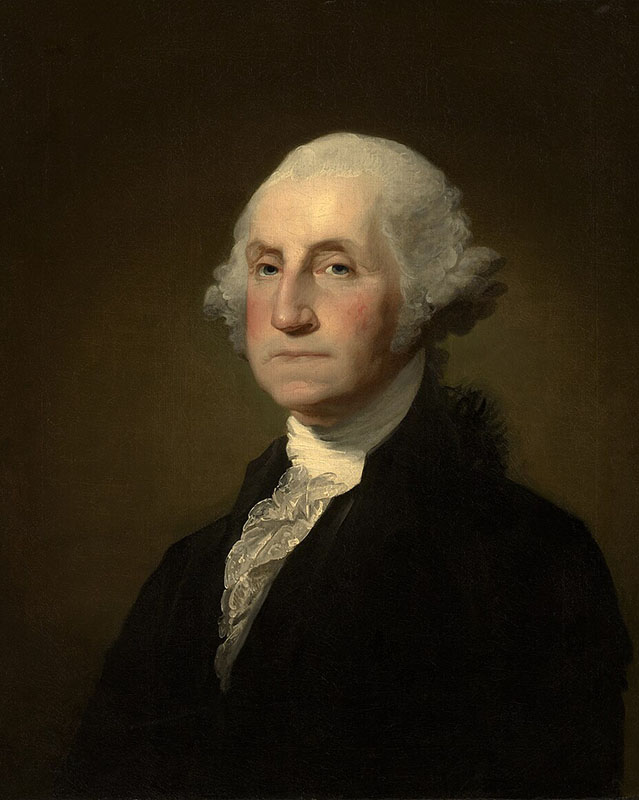
Oh, I’m going there.
Depending on who you talk to, you might be told the Founders were devout Christians all, or, alternately, determined deists. The truth? We had a ton of Founders (55+!), and beliefs varied.
- Thomas Jefferson was, in fact, a theist, believing in a benevolent creator God but rejecting Christian doctrine.
- James Madison was Episcopalian but was also, in general, a passionate advocate for religious liberty and religious dissent.
- George Washington? Man of contradictions — regular attendee at an Anglican church, frequently ducked out before communion, rarely talked about Jesus but did refer to God as “Providence,” in an interventionist sense.
- Alexander Hamilton was kind of Assorted Christian throughout his life, with the occasional foray into deism.
- John Adams was a theist, believing in an interventionist God, but he was a Unitarian and studied the Bible from a philosophical standpoint.
Their intent as to church, state, and the separation thereof? Again, varies. As remains the case today, we mostly hear the views of the loudest and most stubborn ones, but those loudest and stubbornest did at least do us the favor of writing down their feelings on the matter. Like Jefferson’s letter to the Danbury, Connecticut, Baptists, wherein he straight-line specified that the Establishment Clause was intended to build a “wall of separation between Church & State.” Or the Treaty of Tripoli, negotiated by President Washington, signed by President Adams, and ratified by the Senate, which explicitly said, “The government of the United States is not in any sense founded on the Christian religion.” And Madison was very vocal about such separation, writing once that “religion is essentially distinct from Civil Govt. and exempt from its cognizance; that a connexion between them is injurious to both[.]”
Just to name a few.
But the “Christian nation” thing, though?
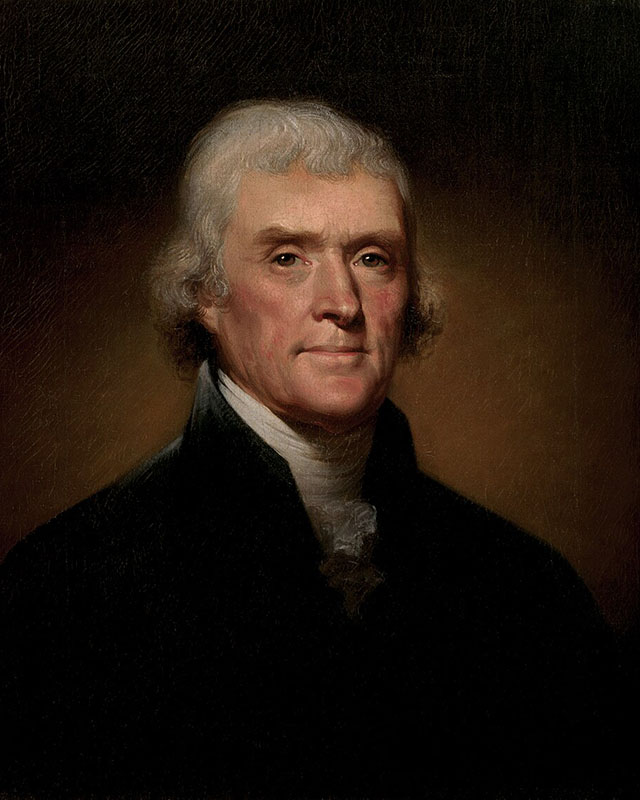
I’m getting there. Did “the Founders” intend for the U.S. to be a Christian nation? Probably some of them did, and clearly some of them didn’t. It’s notable the Constitution doesn’t mention God outside of the “Year of our Lord” part. The Declaration of Independence, whose birthday we’re celebrating this weekend, references a deity four times:
- “the Laws of Nature and of Nature’s God,” in the preamble
- “endowed by their Creator,” in the self-evident truths,
- “appealing to the Supreme Judge of the world for the rectitude of our intentions,” toward the end
- “a firm reliance on the protection of divine Providence,” bringing it all home
Jefferson was responsible for the preambular mention, and the other three were added by others in the Committee of Five during the editing process, making it increasingly God-invoking but never explicitly Christian-god invoking the more hands got on it. So you’ve got some straight-up Enlightenment deistry, some appeal to a generally interventionist deity, and a strong sense the drafters wanted to vague things up enough that, 250 years later, we wouldn’t be having precisely the freedom-of-religion cage match we’ve been having practically since the ink dried.
The Founders weren’t afraid to flingeth some hands.
The Massachusetts Ratifying Convention in January of 1788 included a Federalist-vs.-Anti-Federalist fistfight that ended only when the Antifes agreed to ratify on the condition they be allowed to discuss amendments, in what became known as the Massachusetts Compromise. Cooler heads ultimately prevailed, presumably because the goat-hair wigs had been knocked off of them.
So what?
So that’s where we came from, circa 250 years ago: a bunch of rich, smelly, slave-owning dudes, slap-fighting their way to a new nation, population 2.5 million, where an Electoral College was the framers’ workaround for an uneducated public and sessions of Congress had to be scheduled around harvesting season. They didn’t intend the U.S. to be a nation where women or Black people or Native Americans are allowed to vote, or presidents have term limits, or vehicles travel above 15 miles an hour, and many of the freedoms we hold precious today would give Roger Sherman a stroke if he heard about them.
And for the next 250 years, let’s work on building on what’s already been built on what the Founders built for us.
We hold these truths to be self-evident, that all men are created equal, that they are endowed by their Creator with certain unalienable Rights, that among these are Life, Liberty and the pursuit of Happiness.
–That to secure these rights, Governments are instituted among Men, deriving their just powers from the consent of the governed,
–That whenever any Form of Government becomes destructive of these ends, it is the Right of the People to alter or to abolish it, and to institute new Government, laying its foundation on such principles and organizing its powers in such form, as to them shall seem most likely to effect their Safety and Happiness.
Let’s go and form a more perfect Union, y’all. Happy freelanciversary.
Wait. No. Independence Day. That one.
Yeah. Happy Independence Day.