
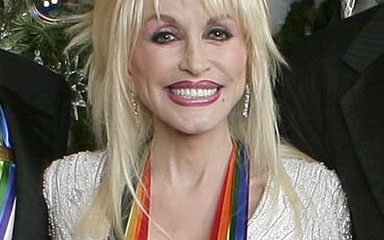
My almost-complete lack of a Southern accent might belie the formative years of my life in East Tennessee, and visits to Dollywood made, and sheer volume of rock candy consumed, and deep and abiding love for Dolly Parton.
Not even country music. Just Dolly. You don’t have to love country music to love Dolly.
She went home on Tuesday to be with Carl Dean, which she’d more than earned, and I have to be happy for her, even if the world wasn’t done needing her yet. And while I’m sure all the praises she deserves have already been sung, and all the things I’m about to say have already been said, I haven’t said them yet, and I get to.
So here’s why I love Dolly Parton.
She was unashamed to be who she wanted to be.
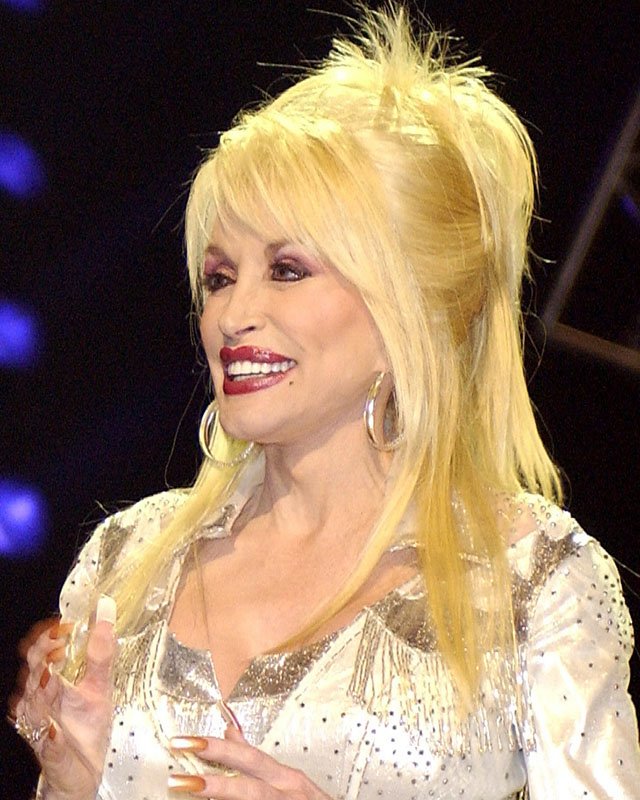
And I’m not saying she was unashamed to be how God made her, because His glory can only be seen there through the art of His surgeons and beauticians. She wanted to look glamorous and sparkly and over-the-top, and so she did, and she wasn’t ashamed of any of it — she once said she wasn’t offended by dumb blonde jokes because “I know I’m not dumb. And I know I’m not blonde, either.”
Dolly didn’t think there was any reason she couldn’t be an artist and a businesswoman and a philanthropist and a DD-cup all at the same time, so she was all of them. She said, “I suppose I am a feminist if I believe that women should be able to do anything they want to. I just really feel I can live my femininity and actually show that you can be a woman and you can still do whatever you want to do.”
She said, “Find out who you are, and do it on purpose.”
She clicked her acrylic nails for the rhythmic typewriter sound in “9 to 5,” and then credited said nails in the liner notes.
Her signature look — big, blonde hair, tight clothes, tons of makeup — was inspired by a woman from her childhood described as the “town tramp,” who she thought was just the most beautiful thing ever. And when the locals dismissed the woman as “trash,” Dolly says she thought, “That’s what I’m going to be when I grow up! Trash!” And then she became a national treasure instead.
She saw money as something to be given away.
Dolly was one of the wealthiest self-made women in the country, but she could have been even richer if it weren’t for her habit of helping, like, everyone. She started from nothing — one of 12 kids surviving in part on her father’s moonshine proceeds — and she seemed to spend her life trying to return to it.
She was, to be clear, exceedingly business savvy — she once said, “My songs are like my children — I expect them to support me when I’m old.” And boy howdy did they. She wrote her own songs, she owned her own catalogue, she made absolute bank off of Dollywood, and just as quickly, she gave it away. As the merest for-instance, personally and via the Dollywood Foundation:
- The Imagination Library, which sends a book a month to kids up to age 5 for absolutely nothing, inspired in part by her own father’s struggles with illteracy
- $1,000 monthly stipends to 900 families in Sevier County, Tennessee, who were left homeless by the widlfires there in 2016
- A $1 million donation to Vanderbilt University Medical Center to help develop the COVID vaccine
- A defunct strip mall in a Black neighborhood in Nashville that she redeveloped into an office complex, using her royalties from Whitney Houston’s cover of “I Will Always Love You”
- Instruments and uniforms for Sevier County High School and Black high schools across the South — often anonymously
When Fred Rogers, a similarly unproblematic fave, told us to “look for the helpers,” he could have been talking about Dolly. (Her family has asked for donations to the Imagination Library in her memory, btw. If you want to be generous, too.)
She was always kind and mostly nice.
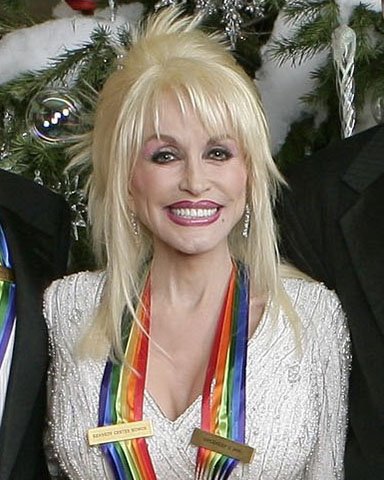
Dolly Parton wasn’t just generous. She was… nice. She was kind. She was a rich Southern boomer white lady who defied every stereotype generally associated with the demographic.
She knew Black lives matter — and not just as a thing to say, but because, “Do we think our little white asses are the only ones that matter?” And she understood the need for marching and protesting. She was an LGBTQ+ ally and icon, in meaningful and vocal and substantive ways (and reveled in all the drag queens that took her as inspiration). She collaborated with Beyonce to celebrate the Black heritage of country music and celebrated her more liberated take on Jolene, and loved Lil Nas X’s cover of same.
She wasn’t perfect, she made mistakes, and she acknowledged them and rectified them, because for all that she picked up the deserving nickname “Saint Dolly,” she was entirely human. Which kind of makes it even more important, I think.
And for my part, on a more egocentric level, she always made me feel like I should be a kinder person. Did it make me actually do anything to become more kind? No, but I’d at least like credit for acknowledging my failings in that area and inspiration to know to want to do better thanks to Dolly.
I mean, even when Jolene was trying to steal her man, Dolly was polite enough to say “please.”
She was funny.
She was funny. Clever, incisive, self-aware, self-deprecating (but only in the most endearing way), smarter than a lot of people gave her credit for.
When a drunk guy at one of her concerts yelled, “I love you,” she said, “I love you, too, but I told you to wait in the trunk.”
When she did the ALS Ice Bucket Challenge, she handed off her jewelry and scarf to protect them from the water, and when her cameraman reminded her to take off her shoes, she said, “Oh, my shoes are plastic. But then again, so’s the rest of me — that’s beside the point.” And then she and her famous blonde bouffant took two buckets of ice water for a good cause.
She said her pre-show ritual, before going onstage, was to “pray and pee, in that order,” which is both cute and a very sensible order to do things in.
She’ll be so very missed.
So, here’s the deal: We have lost a tremendous force for good with the passing of Dolly Parton. The world is left with a goodness vacuum the likes of which a single person cannot fill. We all need to be kinder — even me — and funnier and more generous and more empathetic and more open-minded to make up for the loss. And if all 8.3 billion people in the world right now make a concerted effort to do that, we might be able to almost add up to what she brought to the world.
We, or at least I and many others, will always love her.