
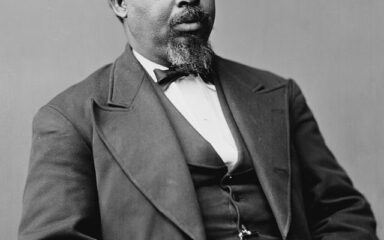
Do I usually do the Famous Person in Black History kind of profiles? No, and no judgment — I just lean more toward contextual stuff. But now here I am, doing that, because I absolutely love this story and if you haven’t heard it, I want to make sure you know about
Robert Smalls, Who Stole a Confederate Ship, Liberated Sixteen Enslaved People, and Became a Captain in the U.S. Navy. And then a Congressman.
LEGEND.
This guy.
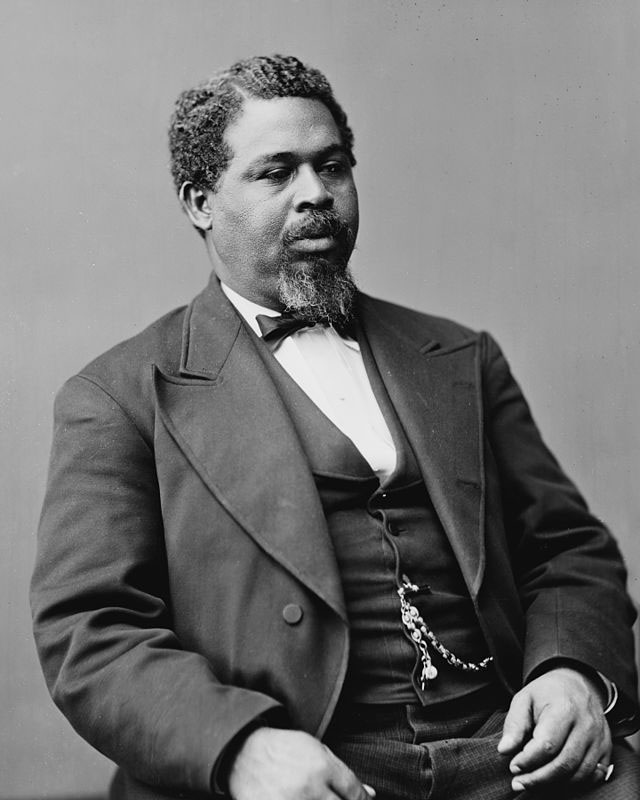
Robert Smalls was born in 1839 and lived with his mother on the property of their enslaver in Beaufort, South Carolina. When we was 12, his enslaver sent him to Charleston to be hired out, where he was a waiter for a hotel before getting a job on the docks. He met his wife, Hannah, there in 1856. By 1862, when things with this story start getting exciting, he was an enslaved crew member on the Planter, which was a steamer used by the Confederate army for transport.
As one might imagine, like probably most enslaved people in the South, Smalls was scared that his family (which now included two young children) could be separated and sold, probably to never see each other again. He’d actually tried to buy their freedom, first, but he couldn’t afford the price — $800 then, about $25,000 today. So escape was the only remaining option.
However difficult you think that could be, it’s more. Just going alone, the penalty for getting caught could be whippings or worse. But he isn’t going alone — he’s escaping with his entire family of four, including a four-year-old who’s going to be more of a challenge than an asset under those circumstances, and a baby who could reveal their position at any moment.
So just the prospect of escaping was a huge undertaking by itself. And then he undertook it by stealing the Planter, a Confederate steamer loaded down with guns, from its mooring in Charleston Harbor.
This. Guy.
To lay out his plan right here: He was going to commandeer the Planter, navigate it through the heavily fortified harbor without getting caught out, and pilot it the ten heavily fortified miles from the Confederate moorings to the Union fleet.
That was the plan.
Smalls did have advantages on his side. For instance,
- he’d been a crew member of the Planter for the past year and
- was recognized as one of the best pilots in the area and
- worked with a crew of six other enslaved men under a captain and officers who
- sometimes left the ship to the enslaved crew members so they could go stay with their family, assuming the crew wouldn’t be capable of pulling off precisely the mission they were about to pull off.
But he knew his plan would face challenges, such as:
- getting the rest of the crew onboard with his plan, with all of them aware of the penalty for failure,
- to pilot the ship through Confederate-controlled waters, surrounded by fortifications,
- in a steamer that belched smoke like a time-battered Festiva
- and was supposed to have three white officers on deck at all times,
- to a Union fleet that was definitely not going to be warmly welcoming of a Confederate ship steaming their way,
hiding the purloined ship in plain effing sight as they cruised toward freedom.
He just, like, stole the boat.
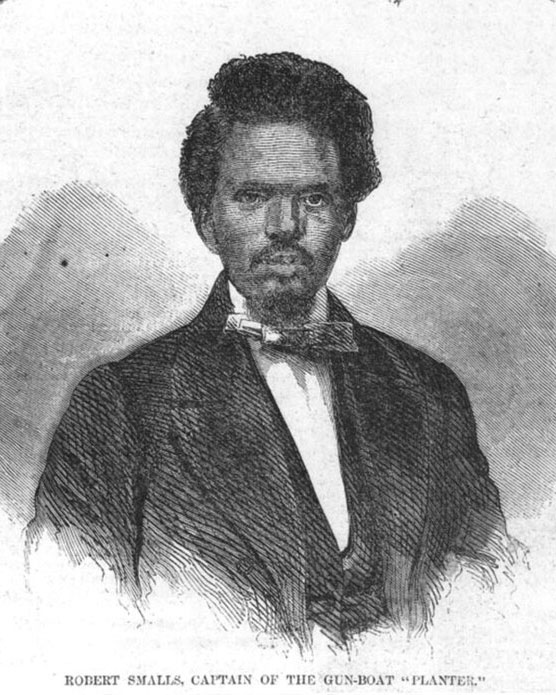
So they waited until the white officers left and just, like, stole the boat. He put on the captain’s jacket and hat and they raised the Confederate and the state flag, steamed on past a guard and a police officer, neither of whom perceived anything hinky, cruised on up to another wharf to pick up the rest of the his family and eight other enslaved people at a rendezvous point, and headed on southward.
Toward Fort Sumter. And as everyone on the ship who wasn’t Robert Smalls fought for control of their bowels, he whistled the appropriate Confederate whistle with the ship’s whistle. And the sentry yelled, “Blow the damn Yankees to hell, or bring one of them in,” to which Smalls replied, “Aye, aye,” I assume while keeping his “how about you fuck yourself” to himself.
Then they continued steaming Union fleetward, swapping the flags for a white bedsheet in the hope of not getting blown out of the water on sight. The first ship they encountered was the Union ship Onward, the captain of which demanded, naturally, to know what the hell they were up to. He ordered them to bring the ship alongside and did, in fact, offer to blow them out of the water if they didn’t comply. But they did come alongside, and Smalls told the captain, “Good morning, sir! I’ve brought you some of the old United States guns, sir!”
If you want to look back to his plan before he started out, it was to commandeer the Planter, navigate it through the heavily fortified harbor without getting caught out, and pilot it the ten heavily fortified miles from the Confederate moorings to the Union fleet.
No plan, they say, survives enemy contact. Except when you’re Robert Smalls.
Oh, I’m sorry, did you think I was done?
Shortly after delivering the ship, Smalls got to meet Abraham Lincoln personally. It was at a later meeting with Lincoln and Frederick Douglass that Douglass encouraged Lincoln to integrate the army, and to give Smalls a key role in it.
And of course Smalls didn’t just bring a ship and a lot of guns to the Union Army — he brought intel on Confederate operations and specific, detailed knowledge of things like the placement of gun batteries and floating mines. They brought him on as a pilot for a number of missions in and around Charleston Harbor, and in December of 1863, a year and a half after he put on another captain’s hat to steal a ship from the Confederate docks directly under their effing noses, he was given his own hat as the actual captain of the Planter and the first-ever Black captain of a U.S. ship.
Back in Charleston, the Confederates could not believe what the hell had just happened, the ship’s wayward captain was court-martialed, and one Confederate aide-de-camp declared that “two white men and a white woman” had conspired to make it happen (because there’s no way a crew of enslaved men would be capable of pulling off precisely the mission they’d just pulled off, right?). A bounty was placed on Smalls’ head, which bothered him not in the slightest.
Did. You. Think. I. Was. Done?
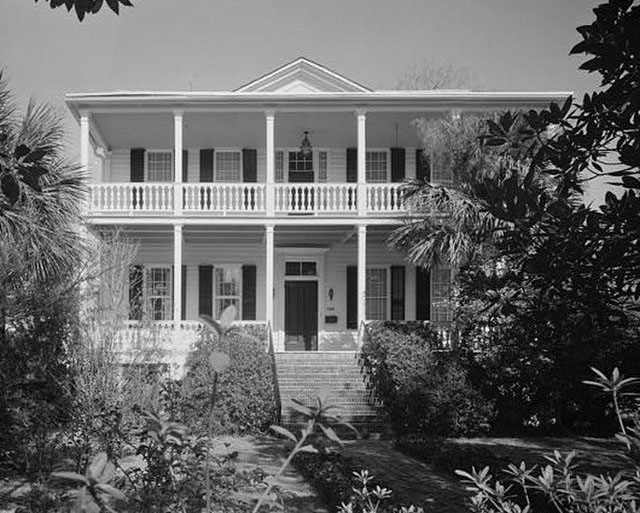
In January of 1864, using the money he was given for delivering the Planter to the Union forces ($1,500, or about $60,000 today), he bought at auction the mansion of his former enslaver.
LEGEND.
He established a local school board in Beaufort County and one of the first schools for Black children in the area. He opened a general store. In 1868, he won a seat in the South Carolina House of Representatives, and in 1870, the state Senate. In 1872, he started a newspaper.
In 1874, he won a seat in the U.S. House of Representatives with 80 percent of the vote and served five terms there, pushing for legislation to desegregate the military and restaurants in D.C.
Robert Smalls died in 1915 at the house he’d been enslaved in, which he now owned, purchased with the money he’d gotten from commandeering a Confederate ship and steering it and fifteen other people to freedom.
So that’s Robert Smalls, Who Stole a Confederate Ship, Liberated Sixteen Enslaved People, and Became a Captain in the U.S. Navy. And then a Congressman.
It’s just one hero story of one guy in the entirety of Black History. But by God, is it a great story to tell, and if you hadn’t heard his story before now, I got to tell it to you, and now you know it. I mean. LEGEND.
(My eternal gratitude to Smithsonian Magazine, Military.com, what’s left of the National Parks Service, and Mental Floss for telling me what’s up.)