
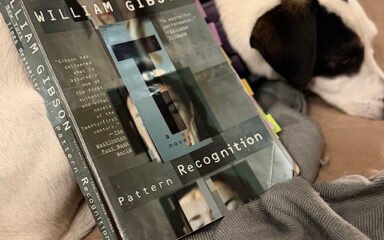
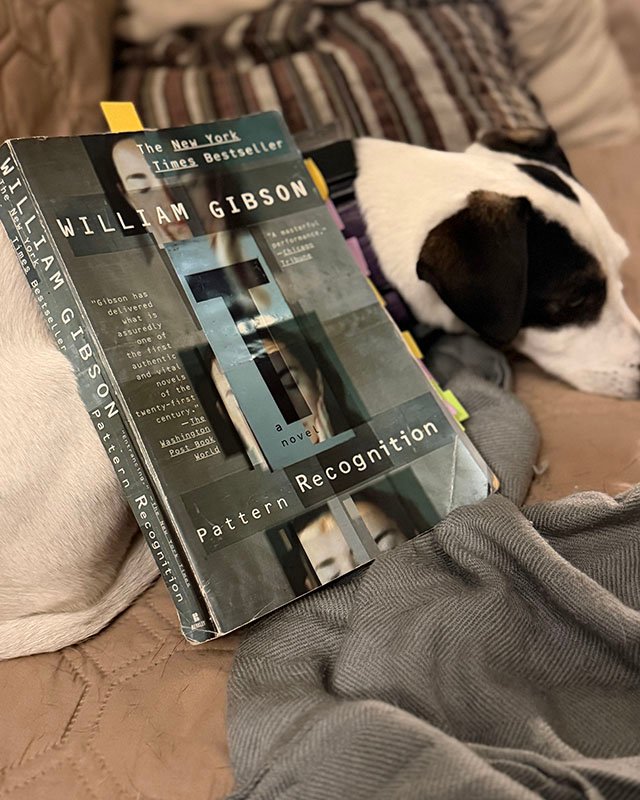
That’s right, bookworms, it’s time once again for the Caperton Gillett Creative Vaguely Advertising-Adjacent Book Club (CGC VAABC). Last month, we were introduced to our heroine, Cayce Pollard, and mysterious people and film clips and missions. (Revisit our previous VAABC post for a refresher if you need it.) This month, in chapters 13-21, we jaunt to Tokyo to catfish some poor, defenseless nerd, Onward!
Okay, what happened here?
In chapters 13-21, we follow Cayce to Tokyo, where she and her footage-freak friends catfish a sad basement dweller to get him to give up some goods, she gets (attemptedly) mugged, and we learn some stuff about her dad. If you need a refresher before you’re ready to discuss, I’ve got your recap right here.
Then it’s catfishing time. She has to print out “Keiko”’s photo in the business lounge and get a full-body image makeover to look more like someone who’d be Keiko’s “friend from the California.” And then she meets the guy in person and feels guilty, because he is clearly a sad and lonely guy who is totally bought into the Keiko situation that was fully orchestrated to do what she now does, which is take advantage of him. Which works. In exchange for the inscribed photo, Taki provides a numerical watermark he’s discerned from one of the clips. And after they part ways, he, in his besottedness, emailed “Keiko” a map with 135 more numbers.
Also after they part ways, Cayce is attacked on the street by some Italian guys, fights them, and is able to escape with the help of our friend Boone.
We also learn Cayce’s father disappeared from Manhattan on 9/11. Not in 9/11, just on it, which is a whole thing we’ll talk about below.
When they return to New York, Bigend is there to pick them up, and to pump them for information about their trip, which Boone provides… technically, if you don’t count all the parts he leaves out. She returns to her friend Damien’s apartment to discover her friend Damien there, with his girlfriend who doesn’t like Cayce. He invites her to stay anyway, and she does, and reads another EVP-conspiracy-theory email from her mother before going to sleep.
And that’s the end of Chapter 21.
Initial thoughts
1. I don’t remember if they keep up the Keiko thing with Taki after they get the goods, and… y’all, if they don’t keep the ruse going until “Keiko”’s natural death, that poor, gullible guy is going to be heartbroken, and it’s going to be their fault.
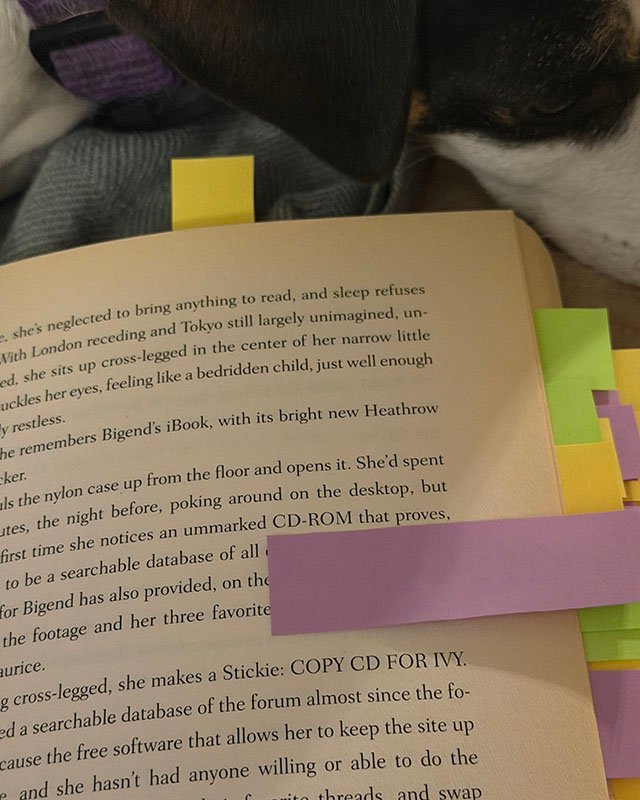
2. Another moment of “aww, retro” with the CD-ROM and the looking for a data port at the hotel.
3. Fun fact: The black version of the Buzz Rickson’s MA-1 didn’t actually exist when the book came out. They only started making one in response to reader demand. A book invented a product which the market willed into existence. Cayce would be appalled.
4. If they didn’t cost $750, I would totally buy one, if only for the whole thing in #3.
More thoughts
The thoughts that came up after the initial thoughts.
So, her dad. And 9/11.
We got little snippets of Cayce’s father, Win, in the previous chapters — “He took a duck in the face at 250 knots” — but with no indication of his significance to the story. Now we get it, and boy howdy.
The backstory, courtesy of Chapter 15, was that her father, Win — a former Cold War security guy, then living in Tennessee — came to Manhattan, and Cayce and her mom hadn’t even known he was in town when he arrived for reasons unknown, staying in a hotel he never otherwise stayed at, leaving on the morning of 9/11 for a destination unknown, and might that destination have been the Twin Towers when they fell? Unknown. Cayce, for her part, was in SoHo at the time and watched the Towers burn through the window of a friend’s studio. And it can be easy to forget, with Gibson’s writing being timeless and all, that thiis book was set barely a year later. So we can look back on Cayce in the past fifteen chapters and re-examine her in the context of intense trauma so real she can still taste it in the back of her throat.
Whole lotta manipulation
This range of chapters takes catfishing to Bassmaster levels. Establishing a deep relationship, photoshopping out the epicanthal folds of an actual person, having that poor hotel employee write God knows what (plus a heart) on the photo, Cayce enduring a full-on, full-body makeover including shopping trip to successfully portray Person Who Could Be Friends With This Person We Made Up. It went from them doing something shady to her becoming something completely manufactured — the kind of person she always detested — for the purpose of deceiving an innocent, unsuspecting man to achieve their goals.
And like I said above, they’re now on the hook for everything that happens with Taki’s emotional state once they’re through this whole thing. If Keiko just vanishes and he crashes out because an emotional pillar in his life has just disappeared, they’re on the hook. Will we, as we continue to read, decide it was worth it? And while I hate tying it in to our industry when this is merely a vaguely adjacent book club, I can’t deny the implications it has for our own work, and the lengths we go to… frame things in the most flattering light for the purpose of achieving our goals.
At this point in the book, we’ve got two mysteries starring mysterious actors — is the filmmaker releasing those clips for fun or profit? Is Cayce’s father dead, or did he opportunistically use a tragedy as a cover to put the dad in skedaddle? And the only people we know actually are lying liars are our protagonist and her friends.
So, I gotta wonder…
Nothing, really. Just continuing to mull over the whole thing with poor Taki and Keiko. Was it ethical? Was it moral? Did the ends, such as we understand them, justify the means? If not, what kind of ends would it take to justify those means? Don’t tell me I have to just read the rest of the book, I lack patience.
Next up
Staying in one place? Screw you, Cayce has work to do. So we’re going back to London. We’re reading chapters 22-32, which is rather a chunk but we get five weeks to do it — we’re regrouping to discuss on Thursday, November 19. So, I’ll see you here, then. In the meantime, our current chapters: What’s the closest you’ve ever come to catfishing someone? I know some of y’all have walked that line. And, on a more serious note, if you’re in advertising/marketing/etc., what precautions, if any, do you take to avoid crossing that line professionally? Let’s discuss in comments.