

I was Andy before Andy was cool.
Not entirely, of course. For instance, I made it two years at a national fashion industry publication that shall remain nameless but was not Vogue before, okay, not flinging my cell phone into any fountains shortly before The Devil Wears Prada premiered.
That said, parts of the movie were flashbackingly familiar for a refugee from the fashion publishing world. Aspects of the real-life job were good, and great, and toxic, and some were exaggerated in the movie for entertainment’s sake, and a surprising number were right on.
Tens of girls would have killed for my job.
Naturally, there were differences between the glamorous movie and my real, boring life. I was working for the chief of the Atlanta bureau, not the EIC in New York. My job was editorial, not personal, assistant, which meant I wrote in addition to my other assistantly duties (managing stylists, photographers, and freelancers; trafficking samples; keeping the editorial calendar; keeping my editor’s clippings; doing her expense reports; fetching her outfits; planning her best friend’s birthday party; tutoring her 4th-grader in math).
And maybe most importantly, my boss was actually a nice person. (Boss In Question, should you somehow end up reading this: You were a nice person and in no way a devil.) But more on that later.
That’s not to say Andy and I didn’t have anything in common — there was plenty. Like her, I was fresh out of college, aspiring to become a for-real writer (her a journalist, me a copywriter), taking the job as default (her from desperation, me as a bait-and-switch from a friend of a friend who was that desperate to get out), not knowing Thing One about fashion or the fashion industry. But the similarities pretty much end there — for instance,
I took my job seriously from the start.
Did I bother to scrounge up an Anne Klein suit for the interview? Hell, I bothered to show up with a notebook and a pen on the first day, which somehow eluded Andy. I went in respecting that my job was a job, and that not really understanding the industry made it my job to come to understand the industry. When something didn’t make sense, it was a learning opportunity, not a mocking opportunity. You know, like when you have a job.
The big turning point of the movie is presented as Andy getting bangs and dressing fashionably, but that misses a far more important moment of growth: She got her workplace shit together. And it wasn’t via a tweed Chanel cabby cap that NEEDS TO EXPLAIN ITSELF but by recognizing however much you disdain your industry, people doing their job are depending on you to do your job.
If you think about it, Andy basically lost her entire identity in the process of taking her job more seriously, which… doesn’t speak well of her initial identity. Like, her biggest problem wasn’t that she was a 6 instead of a 4. That said,
Size really did matter.
For the young, the lowly, the green, body size really was implicitly noticed and assessed. (One of the reasons I had to leave the job was that my past eating disorder and brand-new ulcer were being triggered.) For all the past industry folks who’ve said, “That’s a myth! My experience was nothing like that!”: Congratulations. (The demands did appear to become less demanding as one rose through the ranks, although my boss remained intimidatingly waifish.) At the very least, a sample-size body made it easier to borrow samples for special occasions, and while we’re on the subject,
There was NO BORROWING FROM THE FASHION CLOSET.
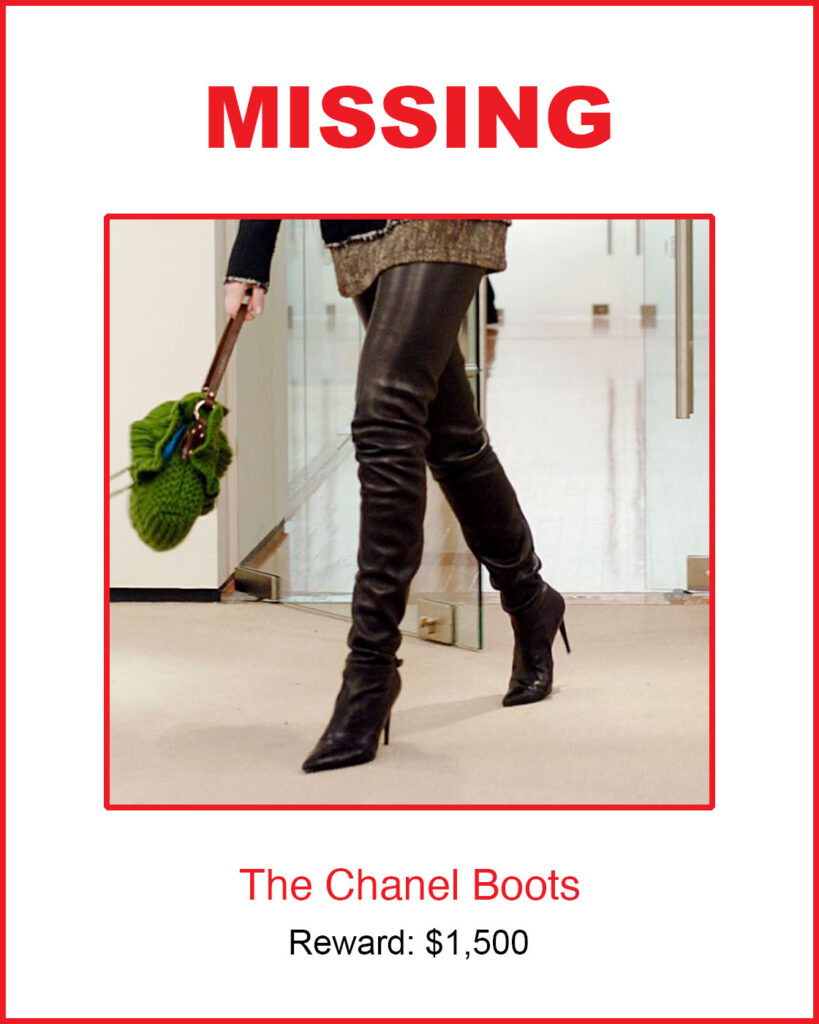
There were no montages of purloined designer lewks. (I can neither confirm nor deny the occasional in-office fashion show when new samples came in.) Y’all, those are NOT THE MAGAZINE’S CLOTHES — they belong to the designers, who expect them back, in good condition, in a timely manner. Even at the actual Vogue, a fashion editor would do you a violence if they saw you sneaking out of the fashion closet with The Chanel Boots.
If you wanted to borrow something, you asked the showroom, and if they couldn’t/wouldn’t oblige, you were on your own to find something fashionable, which was important, because
Labels really did matter.
You’re in fashion, you’re expected to look fashion, which was not easy to do on an editorial assistant’s salary. But clothes were noticed and judged. On my first Very Important Outing as an industry newb, someone complimented me on my cute slingbacks, and when I proudly reported they were Aerosoles, so comfy, I might as well have said they were dead raccoons.
Or the woman in an elevator who complimented me on my jeans and, of course, asked me who they were. And when I timidly responded they were from Target, she paused a moment and then said, “I suppose there’s something to be said for the body in them,” which sounds like a compliment but y’all, I don’t think she meant it as a compliment. But I did usually manage to slide by in-office with clothes sourced from Target or TJ Maxx, and even my boss didn’t go full-time designer. Just in general, in fact,
The Devil wasn’t that devilish.
Like I said, she was nice. But she was also an important person in a very demanding industry, and I was a not-at-all important person in that industry, and that means grunt work. I can’t really think of anyone as openly cruel and hostile as the women in the movie — occasionally stuck-up, sometimes competitive, but never, like, mean. We all pretty much understood we were in the same boat.
So yes, there were long hours, and weekends, and the occasional impossible task that nonetheless had to be done — I never had to pirate a Harry Potter manuscript, but I did have to have two discs of photos Delta DASHed up to New York in time for publication. The greatest part of Andy’s suffering came from the caustic, weapons-grade abuse from her asshole boss — something that would have flown back then only slightly more than it would fly today. After-hours errands? Last-minute meetings? Stupid side quests? That’s the price of having “assistant” at the end of your job title.
Plus, Andy got to go to Paris for Fashion Week. I got to go to New York for our publisher’s annual conference in January, and a slushy street corner in Midtown just doesn’t hit the same.
Everyone wanted to be us.
With all that in mind, am I going to see The Devil Wears Prada 2? Sure, when it gets to Netflix. Probably not in the theater, but not because I don’t have any life parallels to the decline of print journalism or anything — I just haven’t been sitting around for 20 years wondering what the characters have been up to.
And ngl, I miss Patricia Field’s iconic costume design. Don’t get me wrong, it was ridiculous even for the era it was set in, which made it, in a way, timeless. Molly Rogers definitely knows her stuff, but all the promo pics have been so neutral-toned and shapeless-suiting-centric, it makes me long for a tightly belted burgundy fur coat.
That’s all.